The Nike–7-Eleven Lawsuit: Can a Brand Really Own a Color?
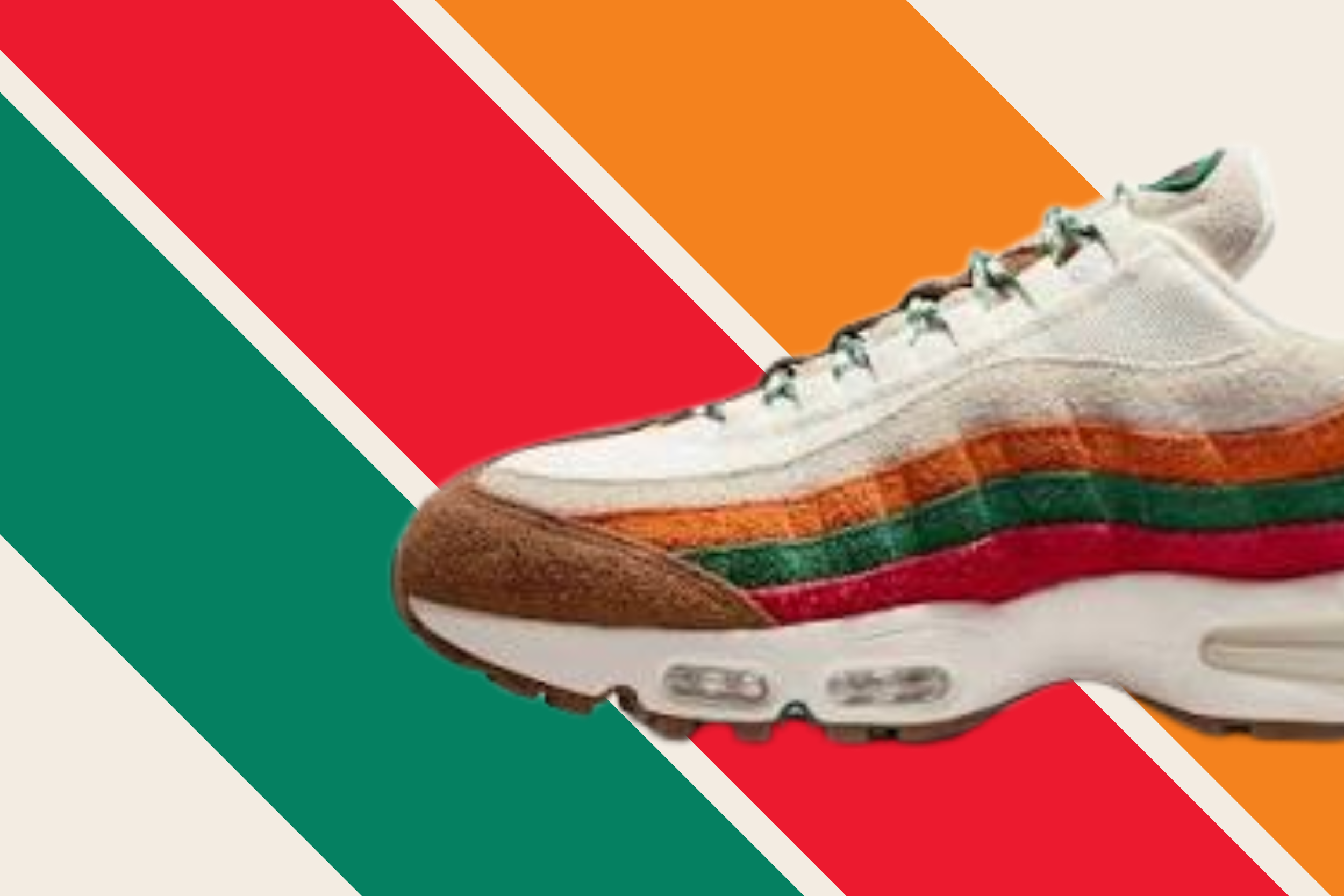
If you've been anywhere near sneaker news lately, you've probably seen the headlines: 7-Eleven is suing Nike.
Here's the quick version. Nike planned to release an Air Max 95 in an orange-and-green colorway, with red striping, set to drop on July 11 (7/11, get it?). The shoe's insole even featured artwork resembling a convenience store aisle, and the product description referenced strolling down to the corner store. 7-Eleven wasn't amused. The company filed suit in a Texas federal court, arguing that Nike deliberately imitated its "Tri-Color Mark" (the orange, green, and red combination it's used on storefronts and merchandise for nearly sixty years) and timed the release to piggyback on 7-Eleven's own branded holiday. The suit accuses Nike of trademark infringement, dilution, and unfair competition, and asks the court to block the launch, pull existing stock, and hand over profits.
As someone who thinks about color, brand systems, and visual identity for a living, this case is fascinating, and honestly, a little absurd.
Where I land on this
Here's my take: I don't think a company should be able to own a color combination outright, especially across entirely different industries. A gas station's neon signage and a pair of running shoes are not the same visual context. Nobody is walking into a Nike store, seeing an orange-and-green sneaker, and thinking they've wandered into a convenience store. The context changes everything: the application, the audience, the purpose of the color choice.
Could you copyright a rainbow? Obviously not. So where's the line?
Where 7-Eleven has a point
That said, I'll give credit where it's due: intent matters in trademark law, and the details here aren't subtle. The July 11 release date, the convenience-store insole art, the "corner store" language in the product copy: that's not an accident, that's a wink. If Nike was intentionally referencing 7-Eleven's brand without a licensing deal (the two companies reportedly discussed an official collaboration back in 2020 that never materialized), that's a different conversation than two brands independently landing on similar colors.
Why this matters if you're building a brand
This case is a good reminder that color, on its own, rarely earns full legal protection, but color plus consistent, decades-long association with your brand can. 7-Eleven didn't just pick a palette; it built six decades of recognition around that specific combination, applied consistently across stores, apparel, and products. That's the difference between "I like these colors" and "these colors are legally mine in this context."
If you're a small business owner, the takeaway isn't "trademark your color palette and start suing people." It's this: consistency is what makes a color scheme yours in the eyes of your customers, long before it's ever a legal question. The more consistently you show up (same palette, same feel, applied everywhere), the more that combination becomes shorthand for you.
Where do you land on this one? Team Nike, Team 7-Eleven, or somewhere in the murky middle with me?